
Revitalization Begins Before Construction
Across the country, communities invest in façade improvements, adaptive reuse projects, downtown events, and economic development initiatives. While these investments are important, successful revitalization depends on more than individual projects.
Communities thrive when the conditions that support long-term resilience are aligned. Housing, governance, infrastructure, social capital, environmental stewardship, and local economies all influence whether revitalization efforts succeed.
The Structural Scaffolding Framework was developed to help communities understand those relationships before significant investments are made.
The Framework
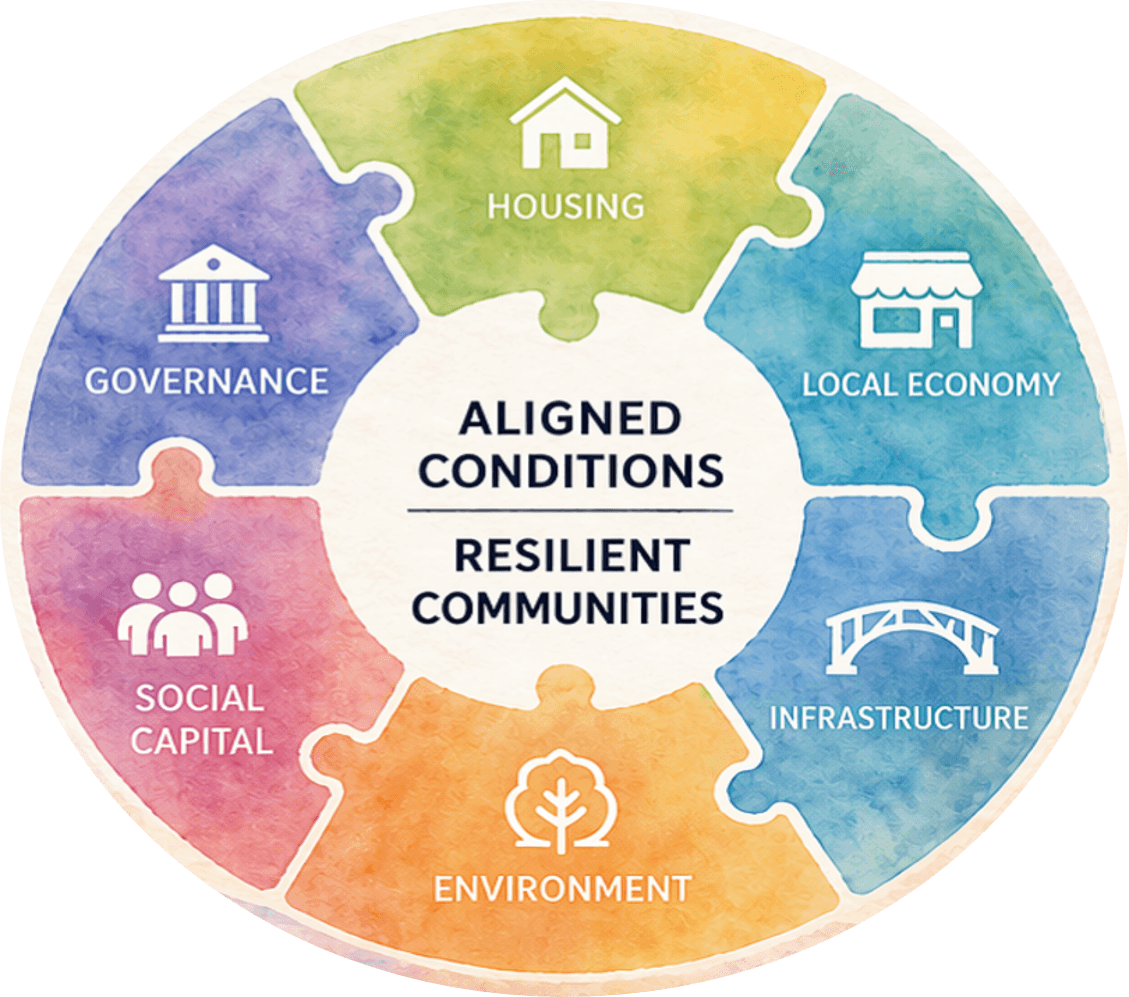
The Structural Scaffolding Framework evaluates the interconnected systems that influence community resilience. Rather than measuring individual projects, it examines the relationships between the conditions that allow communities to adapt, grow, and sustain revitalization over time.
The framework is organized around six interdependent components:
• Housing
• Local Economy
• Infrastructure
• Environment
• Social Capital
• Governance
Together, these elements provide a holistic picture of community capacity and help identify strengths, vulnerabilities, and opportunities for strategic investment.
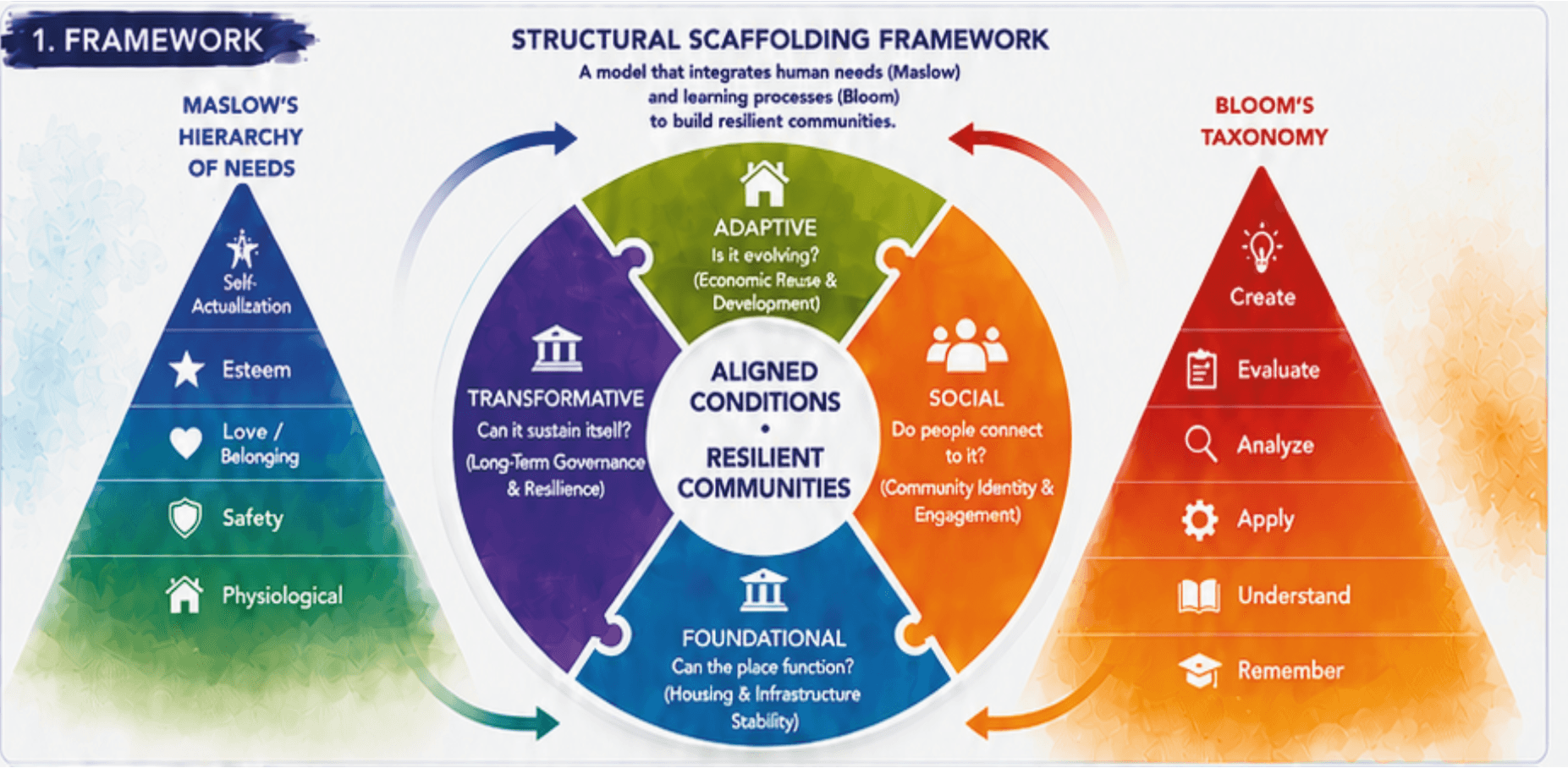
The framework originated from an unexpected question:
How do communities learn to become resilient?
While researching community revitalization, I found that many of the same principles used to support individual growth could also explain how communities develop.
Maslow's Hierarchy of Needs demonstrates that higher levels of achievement cannot be reached until foundational needs are met. Bloom's Taxonomy shows that learning develops progressively through increasingly complex levels of understanding.
The Structural Scaffolding Framework adapts these educational theories into a model for community development, recognizing that communities also require strong foundations before meaningful transformation can occur.
Built on Educational Theory

From Theory to Practice
The framework is designed to move beyond theory by providing practical tools that communities can use to evaluate existing conditions, identify structural gaps, and prioritize future investments.
Rather than asking:
"What project should we build next?"
the framework asks:
"What conditions must exist for that project to succeed?"
This shift allows preservation, adaptive reuse, housing, infrastructure, and economic initiatives to work together rather than compete for limited resources.
Assessment Tools
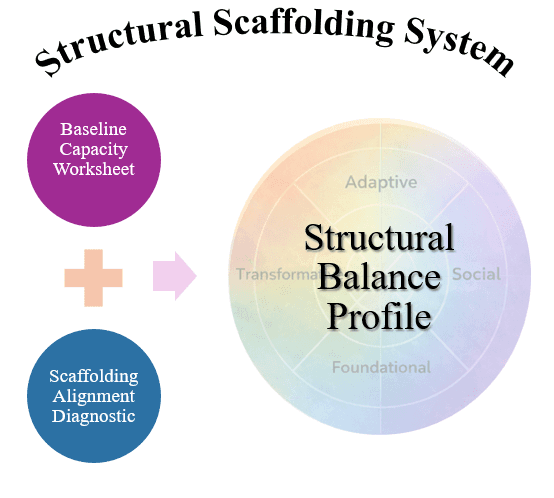
Community Capacity Assessment
Evaluates the foundational conditions that support long-term revitalization.
Structural Balance Profile
Visualizes strengths and weaknesses across multiple community systems.
Zone Diagnostic
Identifies which stage of development a community currently occupies and where additional capacity is needed.
Strategic Recommendations
Transforms assessment results into practical preservation and revitalization priorities.
Applications
The Structural Scaffolding Framework can be adapted for a variety of community planning initiatives, including:
• Historic preservation planning
• Main Street revitalization
• Downtown economic development
• Adaptive reuse feasibility
• Heritage tourism
• Community resilience planning
• Grant prioritization
• Municipal strategic planning